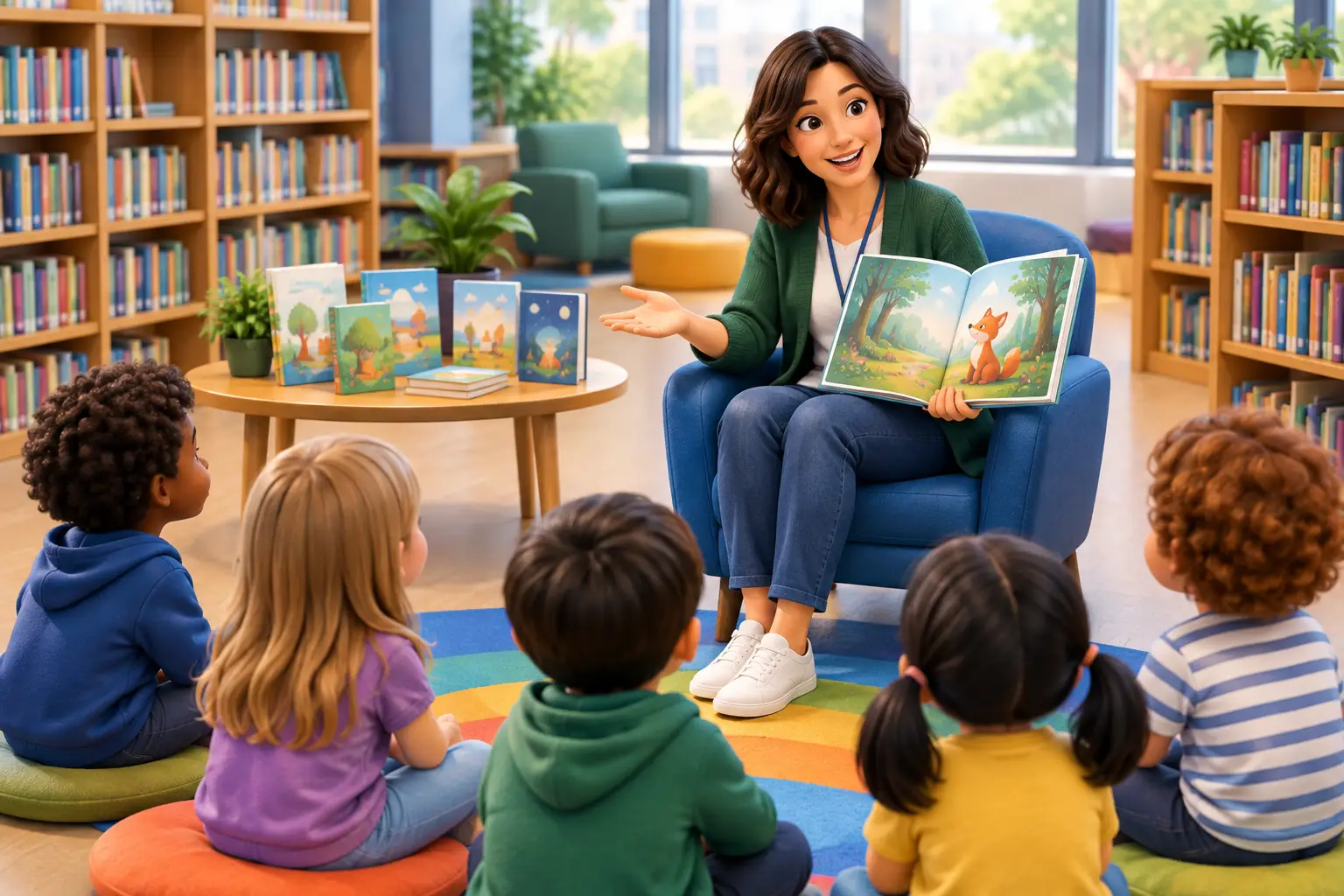
A library storytime is not just a cute reading opportunity. It is a live audition for the people who can recommend your book, invite you back, introduce you to families, and connect you with schools and local events. Done well, library storytime author outreach turns one children’s book into a repeatable visibility system.
The problem is that many authors send one generic email, hear nothing, and assume libraries are impossible to reach. Usually, the issue is not the book. It is the outreach. Librarians are busy, programming calendars fill early, and a request that creates extra work is easy to postpone.
Your goal is to make saying yes feel simple. Give librarians a clear reason to host you, a ready-to-use event concept, and enough professional material to trust that you will be prepared.
Start With the Opportunity Behind the Storytime
A storytime can sell books, but that should not be the main promise you make to a library. Many libraries have policies around on-site sales, and some prefer to order titles through their existing channels. Treat book sales as a possible bonus, not the entire business case.
The bigger opportunity is credibility. A librarian who sees you engage a room of children and caregivers may recommend you for a seasonal program, a summer reading event, a homeschool gathering, or a branch-wide series. Parents may remember your name when they need a birthday gift, a resource, or a speaker for a community group. Schools often pay attention to authors who already have a successful local library presence.
That is the shift: do not pitch a reading. Pitch a valuable, low-lift program for their patrons.
Before contacting anyone, define the age group your book serves and the outcome of your session. For example, a picture-book author might offer a 30-minute interactive storytime for ages 3 to 7 that includes reading, a simple movement activity, and a take-home coloring sheet. An early-reader author might offer a confidence-building reading activity for kids ages 6 to 9.
Specificity makes your request easier to evaluate. “I would love to read my book” is about you. “I can provide a 30-minute spring storytime for preschool families, including an interactive activity and printable” is a program a librarian can picture on the calendar.
Build a Library-Ready Outreach Kit
You do not need a glossy 20-page media kit. You need a small set of assets that answers the questions a children’s librarian will have before they ask them.
Start with a one-paragraph program description. State the title, intended age range, duration, what children will do, and what the library needs to provide. If you bring your own activity materials, say so. If you can adapt the event for a theme such as summer reading, kindness, animals, back-to-school, or family literacy, mention that too.
Next, prepare a concise author bio that establishes why you are a good fit for young audiences. Include relevant experience, but do not inflate it. If you are a parent, educator, former teacher, child development professional, illustrator, or experienced presenter, that context helps. If this is your first public reading, lead with your preparation and the value of the activity rather than pretending you have a long event history.
Have clean book details ready: cover image, publication date, ISBN, format, price, ordering information, and a short summary. Add one professional author photo. Keep everything in a folder you can send immediately when asked.
Finally, create a simple follow-up asset for caregivers. This could be a printable activity page, discussion prompts, or a short reading challenge. Libraries appreciate programming that extends beyond the 30 minutes you are in the room.
Find the Right Person, Then Make a Useful Ask
For library storytime author outreach, sending your message to the general library inbox is better than doing nothing, but it is rarely your best move. Look for the children’s librarian, youth services coordinator, programming librarian, or branch manager. Larger systems may have individual contacts for each branch.
Local libraries are the right place to begin because you can offer a genuine community connection. Then expand to nearby towns within driving distance. A focused list of 25 well-researched libraries will outperform 200 copied-and-pasted emails.
Your first email should be short enough to read between meetings. Use the librarian’s name, name the program, state who it is for, and explain why it fits their patrons. Include a sentence that shows you understand their role: you are offering a prepared program, not asking them to design one for you.
Here is the basic structure:
“Hi [Name], I’m [Author Name], a local children’s author of [Book Title], a picture book for ages [range]. I’m reaching out to offer a ready-to-run [season or theme] storytime for your young patrons. The 30-minute program includes an interactive read-aloud, [activity], and a printable take-home resource. I provide all activity materials and can adapt the session for your calendar. Would you be open to reviewing a one-page program overview?”
That message earns permission for the next step. It does not bury the librarian in attachments or demand an immediate commitment.
Timing Matters More Than Most Authors Think
Libraries often plan programs weeks or months ahead. Summer reading, holiday periods, and major seasonal initiatives can be scheduled especially early. If you want a June appearance, outreach in May may be too late for many branches.
Work backward from the event window. Reach out three to six months ahead when possible, then follow up once after seven to 10 business days. If there is no response, move on without taking it personally. Silence can mean a full calendar, a staffing change, or an inbox that never reaches the right person.
A polite follow-up can be one sentence: “I wanted to bump this up in case a future storytime date has opened up. I’d be glad to send the program overview or tailor the session to an upcoming theme.”
Avoid weekly check-ins. Persistence is useful; pressure is not.
Make the Event Worth Rebooking
Getting the yes is only half the work. Arrive early, bring backup supplies, and keep your presentation centered on children rather than a sales pitch. Read with energy, invite participation, and respect the promised time limit.
Afterward, thank the librarian by email within 24 hours. Include a photo only if you have permission to share it, and offer a brief recap they can use internally. Ask one practical question: “Are there other branches, seasonal programs, or school contacts you think might be a fit for this session?”
This is where one appearance can create a chain of opportunities. A librarian may not have another slot this month, but they may know a colleague planning summer programming or a school librarian looking for a local author.
Track every outreach effort in a simple spreadsheet or CRM. Record the library, contact name, date sent, follow-up date, response, event details, and next action. Your book should not rely on memory and scattered email threads. A slot machine runs on luck. A system runs on follow-up, reusable materials, and visible next steps.
Turn Each Storytime Into Ongoing Author Visibility
A booked event gives you more than a calendar entry. With permission, it can become photos, a short recap for your email list, social posts about literacy and community engagement, and proof that you are an active presenter. It can also sharpen your pitch for schools, bookstores, parent groups, and local media.
Do not wait until you have ten events to talk about your work. One well-run storytime gives you a real story: the theme, the children’s engagement, the resource you provided, and the community you served. Share the experience in a way that speaks to adult decision-makers, not just other authors.
If your outreach feels hard to sustain, reduce the friction. Reuse your core program description. Adapt one email rather than rewriting from scratch. Turn the themes in your book into a small bank of event concepts. Book goes in, opportunity comes out, but only when the follow-up system keeps moving.
The next librarian you contact does not need a perfect author with a massive audience. They need a dependable partner who can create a meaningful experience for local families. Make that easy to see, and your book has a much better chance of moving from the shelf to the calendar.
If you're an author who knows you need to post about your book but can't find the time to do it, check out the Author Traction Marketing (ATM) Machine at https://atmmachine.ai