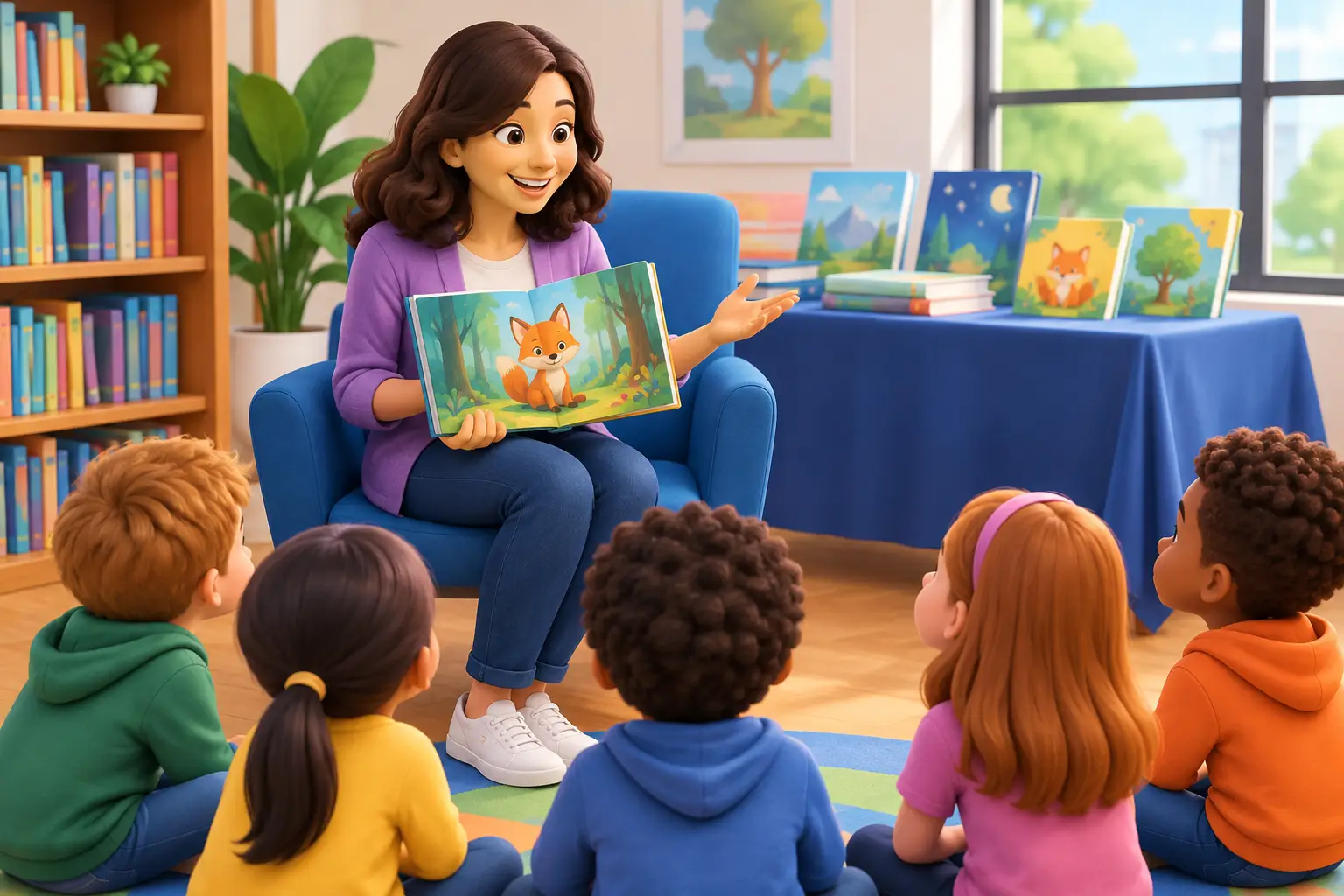
A school visit is not a reward for having published a children’s book. It is a business opportunity that needs a clear offer, an easy yes from an adult decision-maker, and follow-up that keeps your name in circulation. The authors who book children’s book school visits consistently are not necessarily the loudest online. They make it simple for schools to see the value, trust the process, and invite them back.
That matters because a single well-run visit can do more than sell books for one afternoon. It can create referrals to neighboring schools, invitations to library programs, parent-facing visibility, educator relationships, and a steady stream of content that proves you are an active author in your community.
Treat School Visits Like a Program, Not a Favor
Teachers, librarians, principals, and parent groups are busy. They are not looking for another task to coordinate. They are looking for experiences that support students, fit the school day, and feel worth the effort.
Your outreach should not lead with, “Would you like me to read my book?” That puts the work on them to imagine why the visit matters. Instead, present a short, defined program built around a result. For example, your visit might help early elementary students practice kindness, spark creative writing, understand how a picture book is made, or build confidence around a particular social-emotional skill.
Your book is the entry point. The student experience is the offer.
This distinction changes everything. A school can say yes to a 35-minute interactive author program for second graders much more easily than it can say yes to an unfamiliar author asking for promotional space. Be proud of your book, but frame the visit around what children and educators receive.
There is a trade-off here. A broad program may appeal to more schools, but a specific program is easier to remember and recommend. If your book serves ages four through eight, you do not need six different presentations. Start with one excellent, repeatable session and adapt the examples for grade level.
Build an Offer a School Can Approve Quickly
Before you contact anyone, decide exactly what you are offering. Vague invitations create email back-and-forth. A clear one-page school visit sheet creates momentum.
Include the age or grade range, length of each session, ideal group size, the learning outcome, what students will do, your technology needs, and whether the visit is in person or virtual. If you charge a fee, state it plainly. If you offer a limited number of complimentary local visits while building your program, make that boundary clear too.
Your format might include a lively read-aloud, a short behind-the-scenes look at your writing process, an interactive question or activity, and a simple takeaway for the classroom. The point is not to perform for 45 minutes without structure. The point is to create a memorable experience teachers can connect to instruction and students will talk about on the bus ride home.
Book sales deserve their own plan. Many schools have rules around order forms, approved vendors, cash handling, and author payments. Ask early how book purchases work at that school. Do not assume you can bring a box of books and sell at the door.
A better approach is to give the school an easy family order process well before the visit, set a firm deadline, and offer signed or personalized copies where feasible. If the school does not permit sales, the visit can still be valuable. You are building awareness, relationships, photos with permission, testimonials, and future invitations.
Find the Right Adult Before You Pitch
For children’s book school visits, the person who loves your story may not be the person who can put you on the calendar. A classroom teacher may champion you, while the librarian coordinates author events. At another school, the literacy coach, PTA or PTO, principal, curriculum coordinator, or front-office staff member may control the path to approval.
Start by identifying the most likely contact based on your program. A writing-process presentation may be a natural fit for the librarian or literacy specialist. A visit tied to an annual reading celebration may belong with a school event committee. A social-emotional story could be relevant to a counselor or grade-level lead.
Your first message should be short enough to read between meetings. Name the audience, the outcome, and the format. Mention a relevant local connection if you have one, but do not stretch for one. Then give a clear next step: ask whether they are booking author programs for the coming semester, or whether there is a preferred process for guest presenters.
Follow up once, then once more after a reasonable gap. Repeatedly chasing a nonresponse does not create a relationship. Consistent, useful visibility does.
Make Your Visit Easy to Share Internally
Even an enthusiastic teacher may need to forward your information to an administrator, librarian, or parent group. Give them words they can reuse.
Create a concise author bio written for schools, not for your publishing peers. Explain what you write, who the program serves, and why students respond to it. Add a few sentences describing the session in plain language. Include professional photos, a headshot, and a short video clip if you have one.
You also need social proof, but it does not have to be flashy. A teacher quote about student engagement, a photo of a group activity with proper permission, or a note from a librarian about your preparation can carry more weight than a long list of accolades. Early on, ask every host for a brief testimonial while the experience is fresh.
This is where many authors lose momentum. They complete a great visit, post one photo, and move on. Instead, turn one event into a small marketing engine: a thank-you email, a teacher testimonial request, a social post for parents and educators, a future outreach message, and a refreshed school-visit sheet. Book goes in, opportunity comes out.
Deliver a Visit Worth Rebooking
A polished school visit begins before you enter the building. Confirm arrival time, parking, check-in instructions, session schedule, room setup, microphone needs, book-order procedures, and the name of your on-site contact. Schools run on schedules. Showing up prepared is part of your performance.
Keep the program participatory. Children remember a moment when they got to predict an ending, help create a character, practice a phrase, or contribute an idea. Teachers remember whether the room stayed engaged and whether your material worked for the stated age group.
Be realistic about timing. Kindergarten attention spans, auditorium acoustics, lunch schedules, and unexpected announcements can alter the plan. Have a shorter version of your activity ready. If a 40-minute session becomes 25 minutes, you should still be able to deliver the core experience without rushing or apologizing through the final pages.
After the visit, thank the organizer within 24 to 48 hours. Send any promised resources immediately. Ask what worked best for their students, request a testimonial, and let them know you would be glad to return for a future literacy event. This is not a hard sell. It is professional follow-through, and it separates a one-time guest from a trusted local author partner.
Create Consistent Visibility Between Visits
Schools rarely book an author because of one cold email alone. Often, the invitation comes after an educator has seen your name a few times, noticed your book at the library, watched a short video, or heard about you from another school.
That means your marketing should continue between events. Share age-appropriate writing tips, reading activities, behind-the-scenes moments from creating your book, teacher-friendly discussion prompts, and brief clips that show your presentation style. Speak to the adults who make the decision, even when your book is written for children.
You do not need to become a full-time content creator to do this well. You need a repeatable system that turns the ideas already inside your book into useful outreach and visibility assets. The goal is not more noise. The goal is to make the next school that searches your name feel confident that you are prepared, professional, and worth booking.
Your next school visit may start with a story, but it gets booked because you gave an adult a clear reason to say yes. Make that reason easy to see, easy to share, and easy to repeat.
If you're an author who knows you need to post about your book but can't find the time to do it, check out the Author Traction Marketing (ATM) Machine at https://atmmachine.ai